Drain Cleaning in Ephrata, PA
Drain Camera Inspection in Ephrata
Guessing at a drain problem gets expensive. A camera inspection shows the inside of your pipe on a monitor: roots, bellies, cracks, and buildup, and where they sit along the line. For drain camera inspection Ephrata homeowners can call any day, we connect you with a local pro who shows you what is really going on.
Serving Ephrata, PA. Calls answered 24/7. Referral service; calls may be recorded.
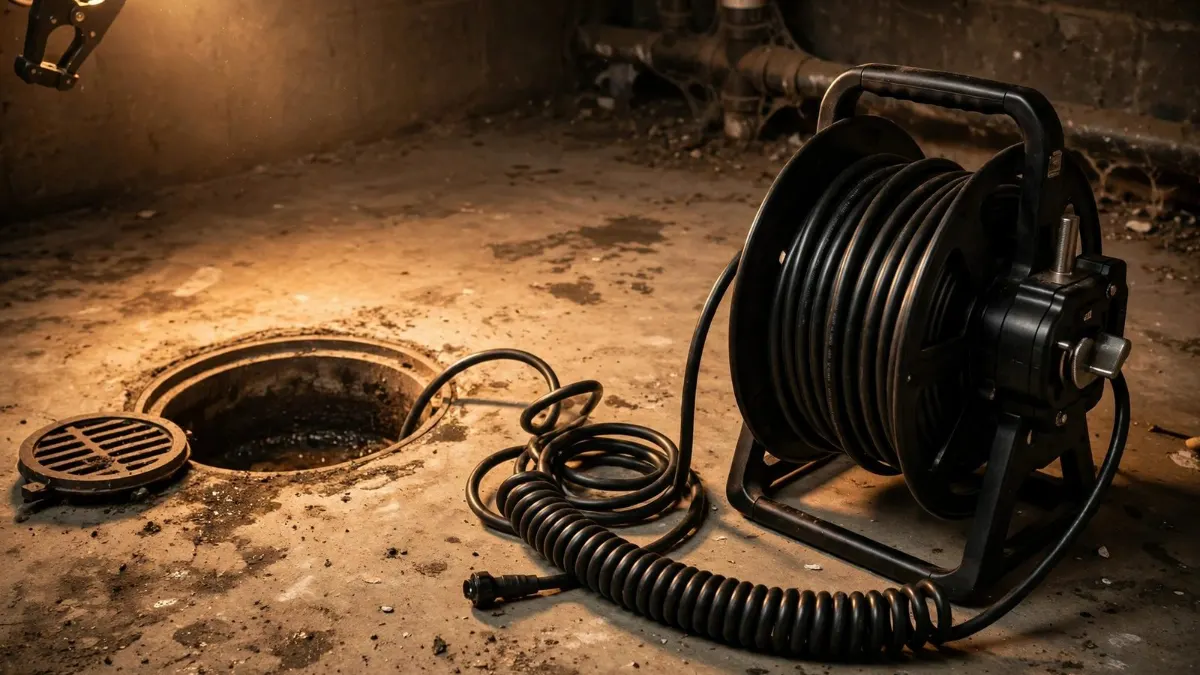
Drain work without a camera is diagnosis by feel: the cable tells the technician where it binds and what comes back on the head, and experience fills in the rest. That works for straightforward clogs. But when a drain keeps blocking, when the cable hits something unfamiliar, or when jetting or digging is on the table, feeling is not enough. You need to see it, which is what drain camera inspection Ephrata is for.
A drain camera inspection Ephrata technicians perform starts at a cleanout or pulled toilet: a waterproof camera head on a push rod travels through the line while the technician watches live video, narrating roots, bellies, offsets, and cracks as they pass. Below is when that look inside pays for itself, what the video can show, and how it changes the fix. Ask what the camera would show in your line.
Drain camera inspection Ephrata: when it makes sense
The clearest case is the repeat clog. If the same drain blocks again within months of a clearing, something structural is catching debris: a belly holding water, an offset joint snagging paper, or roots growing through one joint. Clearing treats the symptom each time; the camera finds the cause, which is the only way to stop the cycle.
If water is actively backing up while you read this, diagnosis can wait: our emergency drain cleaning page covers what to do right now.
The second case is any big next step. Before hydro jetting, the camera confirms the pipe is sound enough to jet. Before excavation, it pinpoints the break so digging stays surgical. Before buying an older home, it checks the one system a standard home inspection never looks inside. In each case the video replaces a costly assumption with a visible fact.
What a sewer camera inspection shows: roots, bellies, offsets, cracks
A sewer camera inspection reads the pipe like a story. Roots appear as fibrous masses growing in through joints, sometimes filling the pipe. A belly shows as a stretch where the camera swims through standing water, the low spot where debris settles. Offsets appear as a visible step where one section has shifted, and cracks show as dark lines with ragged edges.
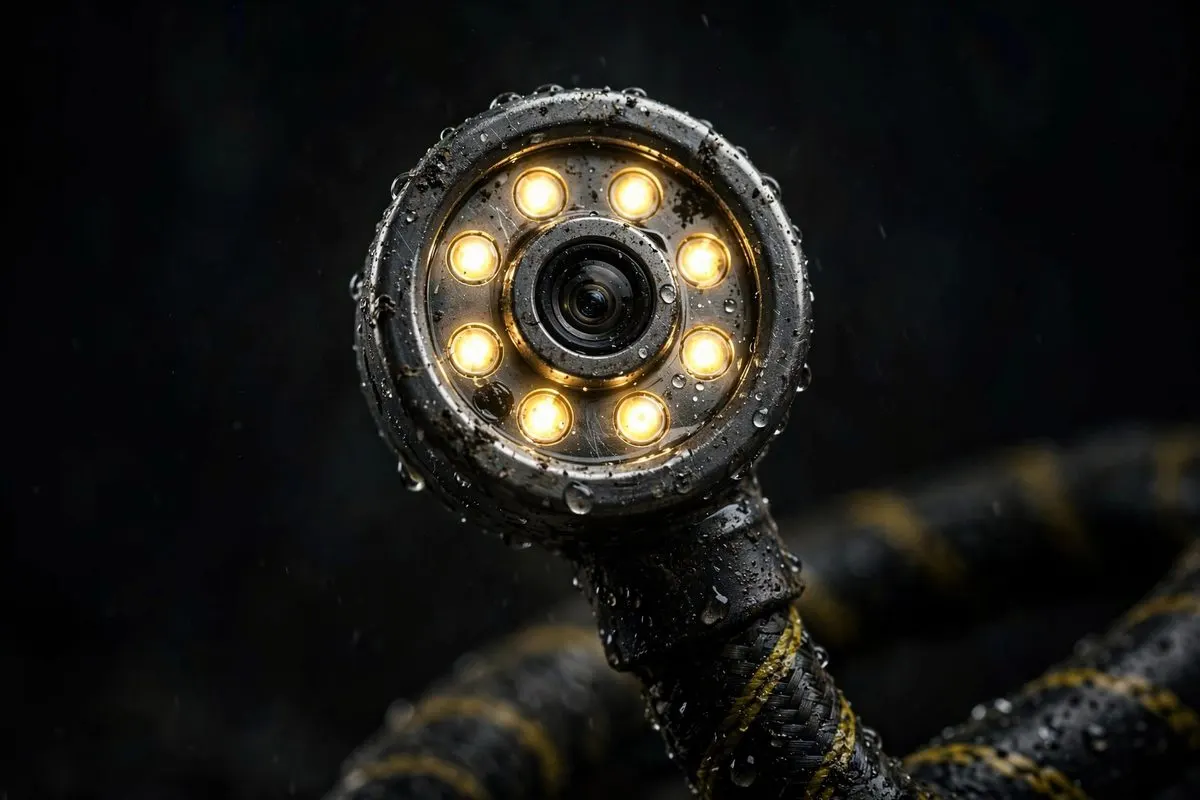
Buildup has its own look: grease coats the walls in pale layers, scale roughens the surface, sludge drifts along the bottom. The camera also records the pipe material and the distance to each feature, so the technician can say the roots start forty feet out. That specificity is what makes drain camera inspection Ephrata video a plan instead of a guess.
Locating the problem with a drain line camera
Seeing the problem is half the job; finding it from above ground is the other half, and that is where the locator comes in. The camera head carries a small transmitter, and the technician sweeps a receiver over the yard or floor above the line. When the receiver finds the signal, the technician marks the spot and reads the depth. A drain line camera that finds a break forty feet out and six feet down tells the excavator exactly where to dig.
That precision matters most when digging is involved. Knowing a belly sits under the driveway versus under the lawn changes the repair conversation; knowing roots enter at one joint versus along the whole run changes the maintenance plan. Location turns a general worry into a specific address, and drain camera inspection Ephrata technicians mark it on the spot.
Find out where the problem is, not just what it might be. The camera and locator answer both questions in one visit.
Inspection after repeat clogs
One clog is an event; two in the same spot is a pattern, and patterns have causes. The camera usually finds unglamorous ones: a belly where water pools, an offset joint snagging paper, a root mass at one joint, or rough scale grabbing everything passing by. None respond to clearing alone, because clearing removes the debris and leaves the cause.
This is the inspection that pays for itself fastest. Three clearings of the same line usually cost more than the camera would have, and the original problem remains. The video ends the cycle by naming the cause, and the fix becomes targeted: jet the rough section, maintain the root joint on a schedule, or repair the belly. That targeted fix is the payoff of drain camera inspection Ephrata. Our floor drain cleaning page covers one of the fixtures where repeat trouble shows up first.
Buying a home: why a video pipe inspection helps
A standard home inspection covers a lot, but it does not look inside the building sewer. That line is buried, out of sight, and expensive to fix, which makes it worth checking before closing. A video pipe inspection of the main drain line produces footage you can keep.
What buyers do with the footage is practical. A clean line is peace of mind, while roots or a belly become negotiation points priced with facts instead of fears. In Ephrata's older neighborhoods, where clay and cast iron building sewers are common, buyers treat a drain camera inspection Ephrata visit as due diligence. If the inspection finds damage beyond what clearing can fix, this site does not do excavation work.
What the camera can show, and what it means
Drain camera inspection Ephrata technicians learn to read these sights the way a mechanic reads an engine.
| What the camera sees | What it means | What happens next |
|---|---|---|
| Root masses at joints | Roots entering through separations | Cutting, then scheduled maintenance |
| Standing water in a stretch | A belly, or sagging section | Monitor, jet, or repair the section |
| Steps or cracks in the wall | Offset joints or broken pipe | Targeted repair or replacement |
| Pale coating or rough walls | Grease, scale, or sludge buildup | Hydro jetting to scour the walls |
If the video shows heavy buildup on sound pipe, the findings often lead to hydro jetting as the next step.
Ephrata homes and camera inspections
Camera inspections earn their keep fastest in Ephrata's older housing. Borough homes with clay or cast iron building sewers, mature trees overhead, and decades of ground movement are the textbook case: roots at the joints, bellies where soil settled, offsets where sections shifted. The camera maps all of it in one pass, which is why drain camera inspection Ephrata calls from the borough so often end with a maintenance plan instead of another blind clearing.
Township subdivisions with newer pipe need the camera less often, but repeat clogs still deserve a look: even modern lines can have a bad joint or a construction belly. In Durlach and the surrounding villages, where housing mixes eras, the camera settles what the line actually is. See drain cleaning in Durlach for the village homes, and drain cleaning in Ephrata Borough for the older lines where inspections pay off most.
When you check availability in Ephrata, ask what a drain camera inspection Ephrata would show in your line. The answer is specific to your pipe.
Drain camera inspection Ephrata: homeowner questions
It shows the inside of the pipe: root masses, bellies where water pools, offset or separated joints, cracks, collapsed sections, and heavy grease or scale buildup. It also shows the pipe material and where the line runs. What it cannot show is anything outside the pipe, like soil conditions, so it answers the question of what is wrong inside the line.
Yes. The technician watches the feed on a monitor during the inspection and will show you what the camera finds, pointing out roots, bellies, or damage as they appear. Ask questions while you watch: seeing the actual problem makes every later decision easier. Some technicians can save the footage for you to keep.
Yes, closely enough to mark the spot. The camera head carries a transmitter, and the technician sweeps a locator receiver over the ground above to mark the spot and read the depth. That matters when a repair needs digging: it keeps the excavation to the problem area instead of the whole line.
For homes with older drain lines, it is one of the smartest checks you can buy. A general home inspection does not look inside the building sewer, and a collapsed or root-packed line is an expensive surprise after closing. The video gives you facts to negotiate with or budget for, instead of hoping the line is fine.
Usually, yes, at least partly. A camera cannot see through a pipe full of standing water or a solid blockage, so the technician typically cables the line first to open a path. Then the camera goes in to show why the blockage formed. Clearing first and inspecting second is the standard order.
It can, but a cleanout is the better entry point. The bends in a toilet trap are tight for the camera head, and the image is harder to interpret through them. If the house has no cleanout, the technician may pull the toilet and run the camera through the flange, which gives a clean shot down the line.
The technician shows you the footage and explains what it means: a belly that explains repeat clogs, roots that explain slow drains, or a break that explains a collapse. Clearing can still restore flow in many cases. If the pipe needs digging and replacement, this site does not do excavation work.
Repeat clogs mean something in the line keeps catching debris, and the camera shows what it is. A sagging belly that holds water, a rough offset joint, or a root mass at one spot all explain why the same drain blocks again. Once you can see the cause, the fix stops being guesswork: targeted clearing, jetting, or repair of that exact spot.
Drain camera inspection Ephrata can call today
One call connects you with an experienced local pro for drain camera inspection Ephrata, with pricing discussed with the technician before work begins. Stop guessing at your pipes.